
Deferred Tax Liabilities in Business Valuation
Do Deferred Tax Liabilities Reduce Business Value?
Deferred Tax Liabilities (DTLs) and Deferred Tax Assets (DTAs) are common features in company financial statements. However, their treatment in a business valuation particularly in expert reports for litigation, tax disputes, or shareholder matters, often causes confusion and disagreement.
Accounting standards present deferred tax assets and deferred tax liabilities symmetrically.
Valuation practice does not always treat them symmetrically.
This page explains the distinction between accounting recognition and economic valuation, and outlines when deferred tax items should, and should not, affect assessed business value.
Accounting Treatment of Deferred Tax
Deferred tax arises from temporary differences between accounting profit and taxable profit.
- A Deferred Tax Liability generally arises where tax deductions have been accelerated ahead of accounting expense recognition.
- A Deferred Tax Asset generally arises where accounting losses or provisions may provide future tax deductions if sufficient taxable profits arise.
For financial reporting purposes, accounting standards require both DTAs and DTLs to be recognised based on expected future reversal of these timing differences.
However, financial statement presentation is not determinative of valuation treatment.
Valuation Treatment: Economic Reality vs Accounting Form
In a valuation context, the relevant question is not whether an item is recognised in the accounts, but whether it is expected to result in real future cash flows that a hypothetical purchaser would reasonably take into account.
Valuation focuses on:
- Expected future cash inflows and outflows
- Risk and probability of those cash flows arising
- The perspective of a hypothetical willing buyer and seller
Accordingly, deferred tax items should only affect value where they are expected to produce real future cash consequences.
Deferred Tax Assets – Recognition of Future Tax Benefits
A Deferred Tax Asset represents a potential future tax saving arising from carried-forward losses or deductible temporary differences.
In valuation practice, Deferred Tax Assets are only recognised where future taxable profits are reasonably expected, because only then will the tax benefit crystallise as a real cash saving.
Where such future savings are expected, they represent future cash inflows which, when discounted to present value, may contribute to the value of an entity.
Why Accounting Symmetry Does Not Imply Valuation Symmetry
Accounting standards require symmetrical presentation of DTAs and DTLs. Valuation does not.
Valuation applies a consistent economic principle:
- Deferred tax assets are reflected where future tax savings are reasonably expected
- Deferred tax liabilities are reflected where future tax payments are reasonably expected (noting that in many cases the underlying tax deduction has already been claimed, and there is no presently enforceable cash tax obligation arising from the accelerated tax deduction).
This ensures valuation reflects economic substance, rather than accounting form alone.
Conclusion
Deferred tax accounting plays an important role in financial reporting. However, business valuation requires an additional step: assessing whether deferred tax balances will result in real future cash flows relevant to a hypothetical purchaser.
Recognising this distinction ensures valuation conclusions reflect economic reality, not purely accounting convention.
About Rushmore Group
Rushmore Group specialises in forensic accounting, business valuation, and expert valuation reports for commercial, tax, and litigation matters across Australia. Contact us for more information or a confidential discussion.
Valuing a cafe or restaurant

Coffee and visiting a local cafe are part of many Australians’ daily routine. Australians are known for their love of quality coffee and this is reflected by the number of cafe’s across Australia.
At Rushmore Group we provide cafe and restaurant valuation reports for a range of purposes including:
- Purchase or sale of the Business.
- Taxation purposes; and
- Shareholder / partnership disputes.
There is a sizeable market for buying or selling a cafe or restaurants.
Many operators of cafes and restaurants internally measure their weekly takings and in our experience many acquisitions are undertaken on the basis of a multiple of weekly takings (or weekly revenue).
The advantage of the use of a capitalisation of revenue methodology is that the expenses of the Business do not require normalisation. Normalisation adjustments are typically seen with private expenditure, non-operational expenditure, motor vehicle expenditure and the salaries and wages of the Directors of the entity.
Cafe’s and restaurants can also be valued using a more traditional capitalisation of future maintainable earnings (FME) methodology.
More information
We provide cafe and restaurant valuation reports for clients across Australia. If you would like further information in relation to a cafe or restaurant valuation, then please do not hesitate to contact us.
Valuation Best Practices for Business Valuation Firms
The process of undertaking a business valuation should be well understood and free from ambiguity however we find that with many business valuation firms this is not the case.
In a current matter that we are involved in the business valuation firm for the seller of shares in a company treated more than $1 million of shareholder loans by the Company as equivalent to a trade receivable. This caused the value of the goodwill to be misstated. The valuation report also did not include a balance sheet for the entity as at the valuation date. The business valuation firm in question had many years of experience and in our opinion is typical of what we find across a broad range of valuation reports.
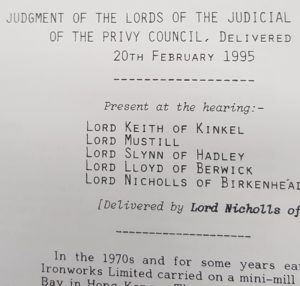
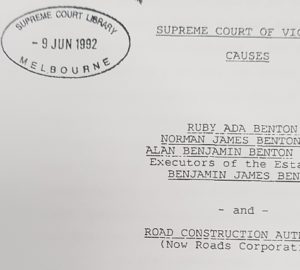
At Rushmore Group we are often engaged to either critique or review business valuation reports prepared by others. Where possible we provide our opinion and also any judicial support in relation to the issue in question. The use of case law to support a conclusion can also assist in breaking a deadlock between the parties in a dispute.
Business Valuation Formula
In the above example with the $1 million in shareholder loans ultimately this was an issue with the basic business valuation formula that was used by the business valuer rather than a difference of opinion as to a variable within the formula. Different business valuation experts are entitled to have different opinions as to the appropriate inputs into a business valuation report however ideally the formula and basic methodology should not be in dispute.
We are also still seeing business valuation reports with broad statements. For example, the business valuer will say that in their opinion “a multiple between 3 and 5 is appropriate” and they have then selected the midpoint of 4 times. From the view of preparing an expert report for legal proceedings and indeed any other purpose, we believe that this approach is too broad. It also fails to critically analyse comparable businesses that have been recently sold.
The Business valuer has a number of options available to them in identifying comparable capitalisation multiples. This includes:
- Public announcements as to a purchase and sale of a business
- Independent surveys
- Business for sale advertisements with appropriate adjustments (although this is not as persuasive as transactions that have been completed by a willing buyer and willing seller).
An essential part of the business appraisal service (when applying a capitalisation of future maintainable earnings or discount cash flow technique) is to research and identify comparable transactions. Identifying suitable evidence for an opinion brings a rigor and professionalism to a business valuation report.
Business Appraisal Services
In another matter we are involved with the business valuer in reaching their opinion as to the value of the Business made adjustments that he believed were reasonable. However these adjustments were invalid from a legal point of view. These adjustments made by the valuer changed the business valuation formula and led the business valuer to an erroneous conclusion.
It is therefore important that the valuer has an appreciation for the legal environment that they are operating in.
We typically undertake engagements in relation to the purchase /sale of business, disputes, valuations for tax purposes and restructuring.
At Rushmore Group we specialise in only engagements that include business valuation services. For example undertaking valuations, critiquing valuation reports prepared by others, and related compensation matters with valuation issues. This approach means that we can develop deep expertise in these subject areas.
For a confidential discussion, please contact Rushmore Group today on 1800 454 622.